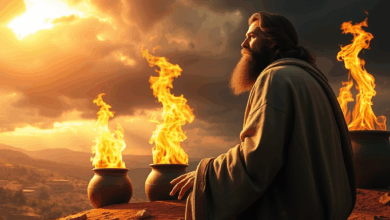
The Cleansing of the Temple stands as one of the most powerful symbols of God’s plan for humanity. Thus marks the moment when Jesus cleanses the temple. This event reveals that the time of outward rituals had ended. The era of true spiritual worship had begun. Understanding Jesus’ Cleansing of the Temple informs us of a significant shift. The purification of man by the blood of animals was over. Now God Himself would save mankind through His own perfect, spotless blood.
From the very beginning, Jesus and the temple story points us to redemption. Now during the Jewish Passover Feast, the Israelites placed the blood of a lamb on their doorposts. This was a sign of divine protection and salvation (Exodus 12:13). That act represented deliverance from slavery in Egypt and foreshadowed a greater salvation to come. Through the prophet Jeremiah, God promised:
“Behold, the days come, says the Lord, when I will make a new covenant with the house of Israel and the house of Judah” — Jeremiah 31:31–32.
So this new covenant would not depend on the sacrifice of animals but on the perfect blood of Jesus Christ.
Jesus Brings a New Covenant
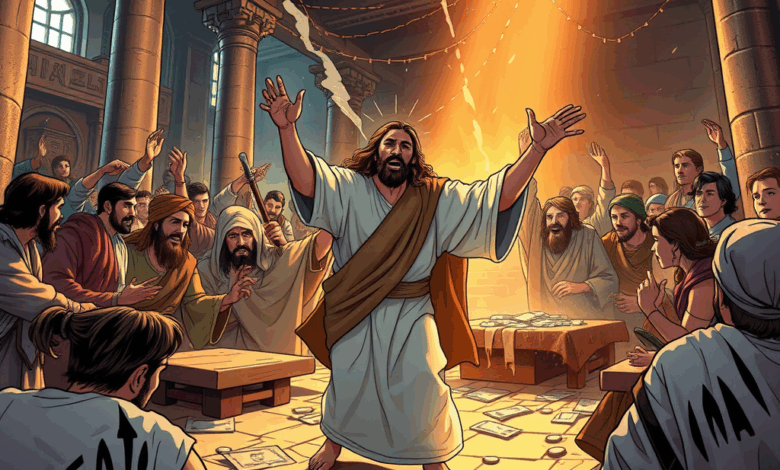
As the time for the Jewish Passover approached, Jesus went to the temple in obedience to tradition. Now every Jewish man was expected to be before God three times a year. These occasions were the Feast of Tabernacles, the Feast of Pentecost, and the Passover Feast. But when Jesus cleansed the temple, He saw merchants and money changers. This deeply displeased Him. They were turning His Father’s house into a marketplace.
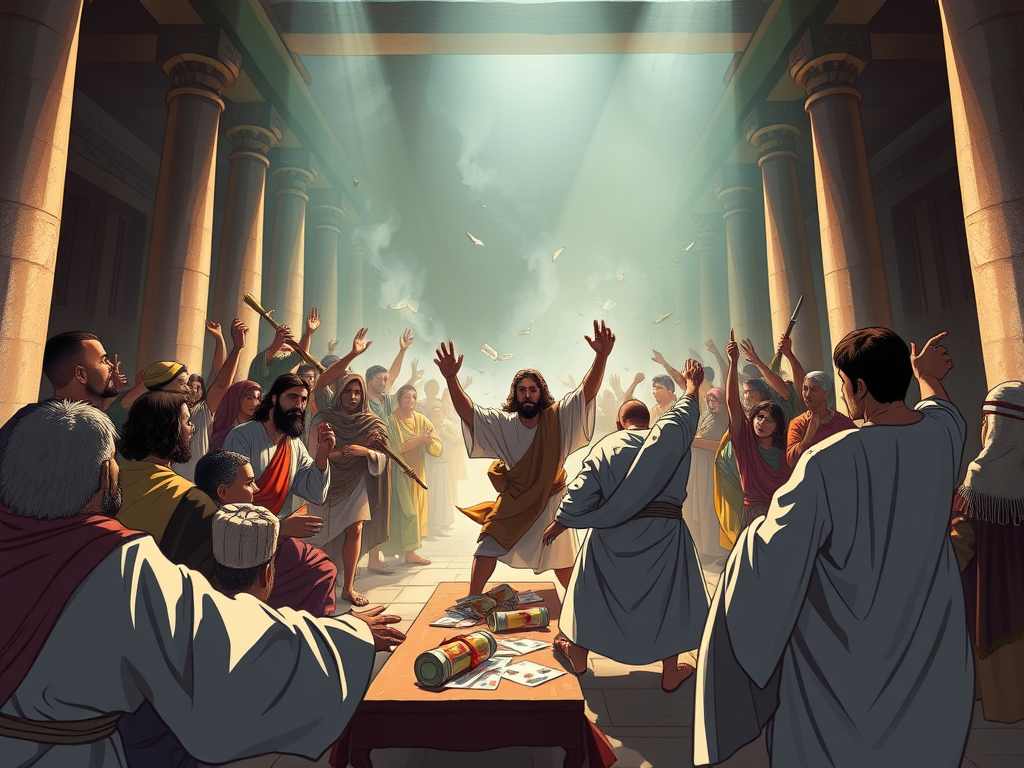
This was no ordinary anger. Jesus chasing money changers from the temple was a divine act of love and authority. He was about to show that worship was shifting from the physical to the spiritual. It was moving from rituals to relationship, and from animal blood to divine redemption. He made a whip of cords, drove out the merchants, overturned the tables, and declared:
“Take these things away! Do not make My Father’s house a house of trade!” — John 2:16
Moreover, Jesus performed not just an act of cleansing, but a declaration of change. The era of temple sacrifices was closing. Salvation Himself was standing in their midst.
The Revelation of True Worship
The disciples watched in awe. They remembered what had been written:
“Zeal for Your house will consume me.” — Psalm 69:9
And the Jewish leaders questioned His authority, Jesus gave a mysterious yet prophetic answer:
“Destroy this temple, and in three days I will raise it up.” — John 2:19
They wondered why did Jesus destroy the temple, not realizing He was speaking of His body. They misunderstood His divine mission. When He spoke of rebuilding the temple in three days, He meant His resurrection. It was a powerful revelation of eternal life and victory.
Many have asked, when did Jesus cleanse the temple? The Gospel of John places this event early in His ministry, soon after the miracle at Cana. This act—Jesus destroying the temple systems of empty religion—was symbolic. He didn’t destroy a building; He overthrew false worship and reestablished true connection with the Father.
When He rose from the dead, the disciples finally understood His words and believed the Scriptures that had been spoken.
Lessons from Jesus’ Cleansing of the Temple
- Jesus initiated the first spiritual protest of the New Covenant.
He challenged religious corruption and defended the holiness of God’s house. - Righteous anger has purpose.
Jesus’ anger was not destructive—it was redemptive. It cleansed, not condemned. - Deliverance begins with cleansing.
Before new life begins, the old had to be purged. - True salvation is spiritual.
The time of physical rituals had ended. Jesus’ blood became the only path to eternal redemption. - The temple symbolizes His body—the Church.
Christ Himself is the dwelling place of God among men. - The mystery of resurrection was revealed.
When He said He would rebuild the temple in three days, He prophesied His victory over death. - Scripture confirms faith.
The disciples’ remembrance of the Word strengthened their belief and mission. - John’s account reminds us to stay vigilant.
Understanding and confirming Scripture deepens our walk with Christ. - Zeal for God’s house still matters.
We, too, must carry the same passion—to protect, honor, and serve the presence of God in our lives.
So, what can we learn from Jesus cleansing the temple? We learn that faith is not about ritual but about relationship. We learn that our hearts must be pure if we are to carry His presence. Again we learn that righteous zeal for holiness still matters to God.
A Call to the Modern Believer
Today, the Cleansing of the Temple speaks to every believer. We are God’s temples (1 Corinthians 6:19). Indeed Christ desires to dwell in a heart that is pure, humble, and dedicated to His purpose. Just as Jesus cleansed the temple, He longs to cleanse our hearts from anything that competes with His presence.
Let us, therefore, welcome Him—not merely as a guest, but as our Lord. May His zeal ignite our hearts and His Spirit reshape our lives. For by the perfect blood of Jesus, we are made complete, renewed, and redeemed.
“Create in me a clean heart, O God, and renew a right spirit within me.” — Psalm 51:10